Why Businesses Need a Single Source of Truth
Same question, three answers, three tools — by design.
What is a single source of truth?
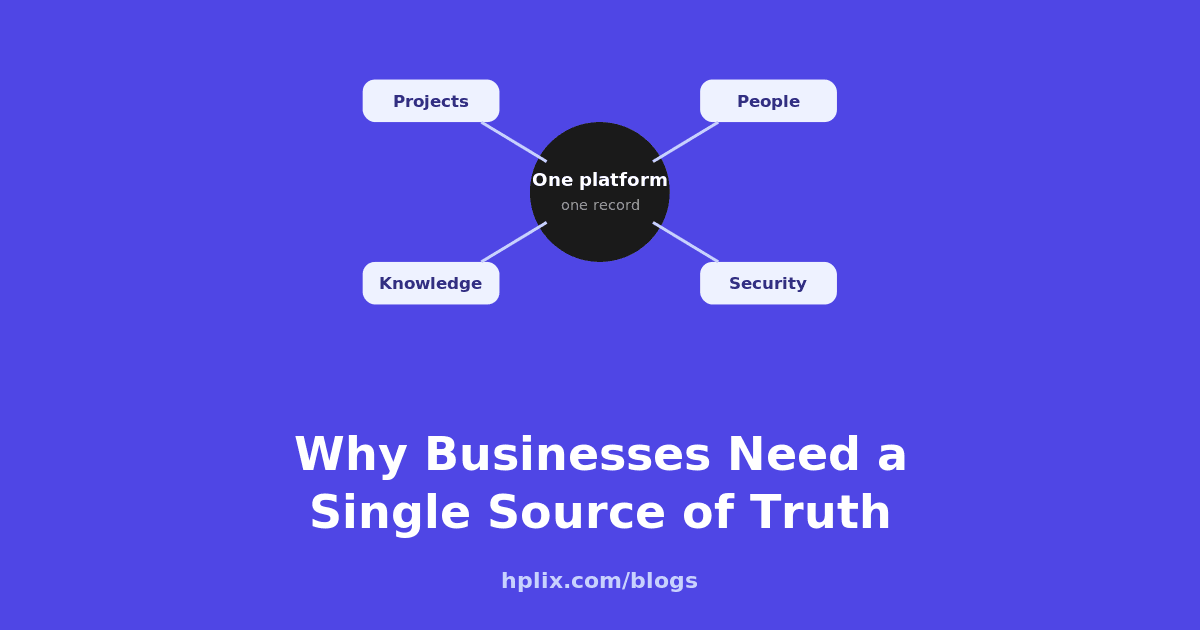
A single source of truth (SSOT) is the practice of keeping every critical piece of business information - projects, people, documents, decisions, credentials - in one authoritative place. Not copied across five tools. Not paraphrased in a chat thread. One record, one owner, one version that everyone trusts.
Most businesses have the opposite: the same "fact" living in a project tracker, a spreadsheet, a chat message and someone's inbox, each version drifting further from reality. Research on enterprise software usage consistently finds that the average organisation now runs well over 100 SaaS applications. Every one of them holds a fragment of the truth, and almost none of them talk to each other.
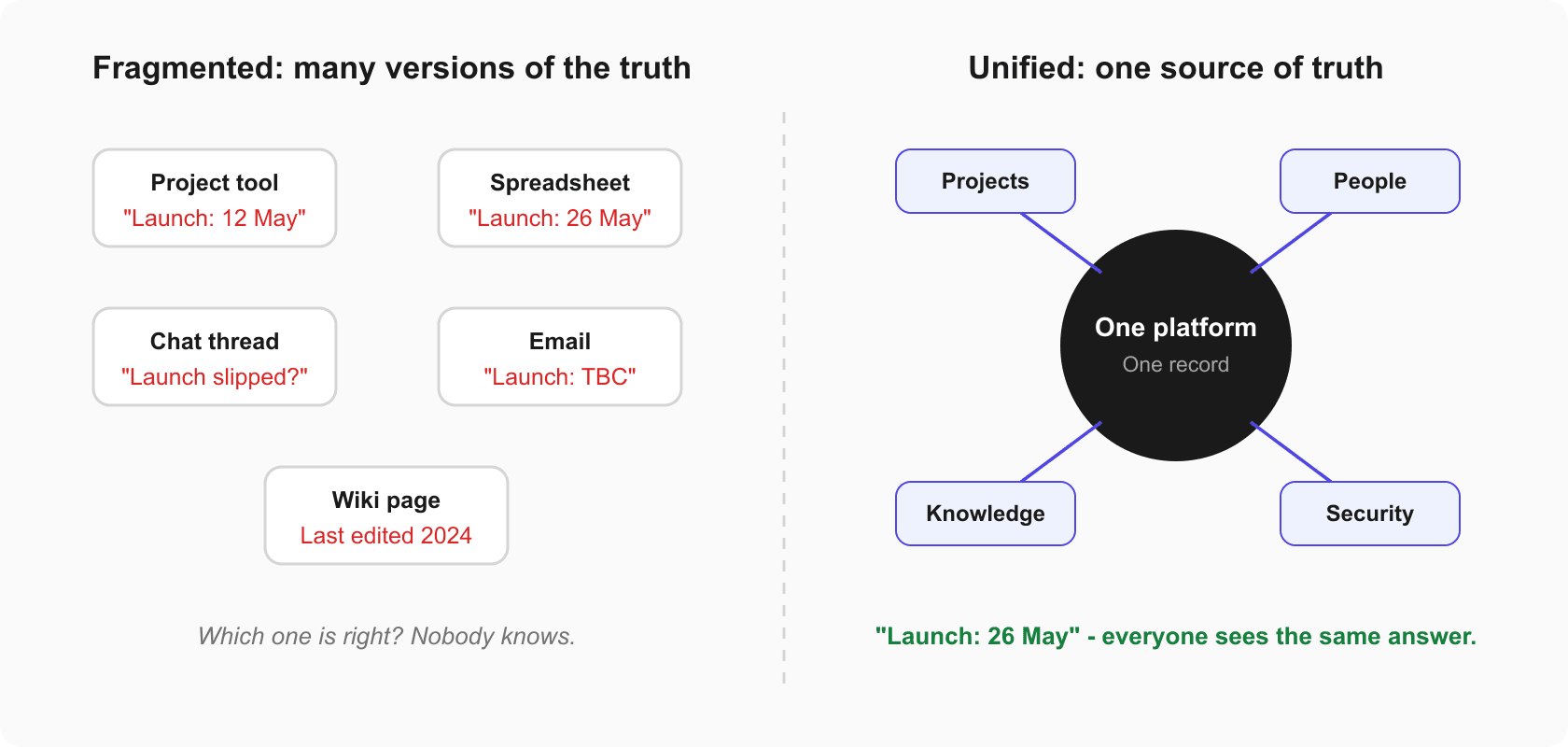
> Key takeaway: A single source of truth is an architecture decision, not a data project: fewer places facts can live. It speeds decisions, restores trust in reports, and is the prerequisite for AI that can act on your business.
The real cost of fragmented truth
Slower decisions. Before a leadership team can decide anything, someone has to reconcile the numbers - pulling exports, chasing colleagues, rebuilding the picture by hand. The decision waits on the data clean-up work.
Eroded trust. The first time a dashboard contradicts a spreadsheet, people stop trusting both. From then on, every report triggers a round of "where did this number come from?" - and teams quietly fall back to gut feel.
Duplicated work. When knowledge is scattered, people can't find what already exists, so they recreate it. Two versions of the onboarding doc. Three trackers for the same project. Each duplicate becomes another source of future contradiction.
Compliance exposure. When access rights, credentials and records are spread across disconnected tools, nobody can answer "who has access to what?" with confidence. That's the exact question an ISO 27001 audit - or a security incident - will ask.
Why integrations alone don't fix it
The instinctive fix is to keep every tool and wire them together with syncs and automations. In practice this creates a new problem: now the truth lives in the pipes. Sync jobs fail silently, field mappings drift, and you end up debugging middleware instead of running the business. Point-to-point integrations copy data around - they don't establish which copy is authoritative.
A genuine single source of truth requires the opposite move: fewer places where facts can live, not more connections between them.
What a single source of truth makes possible
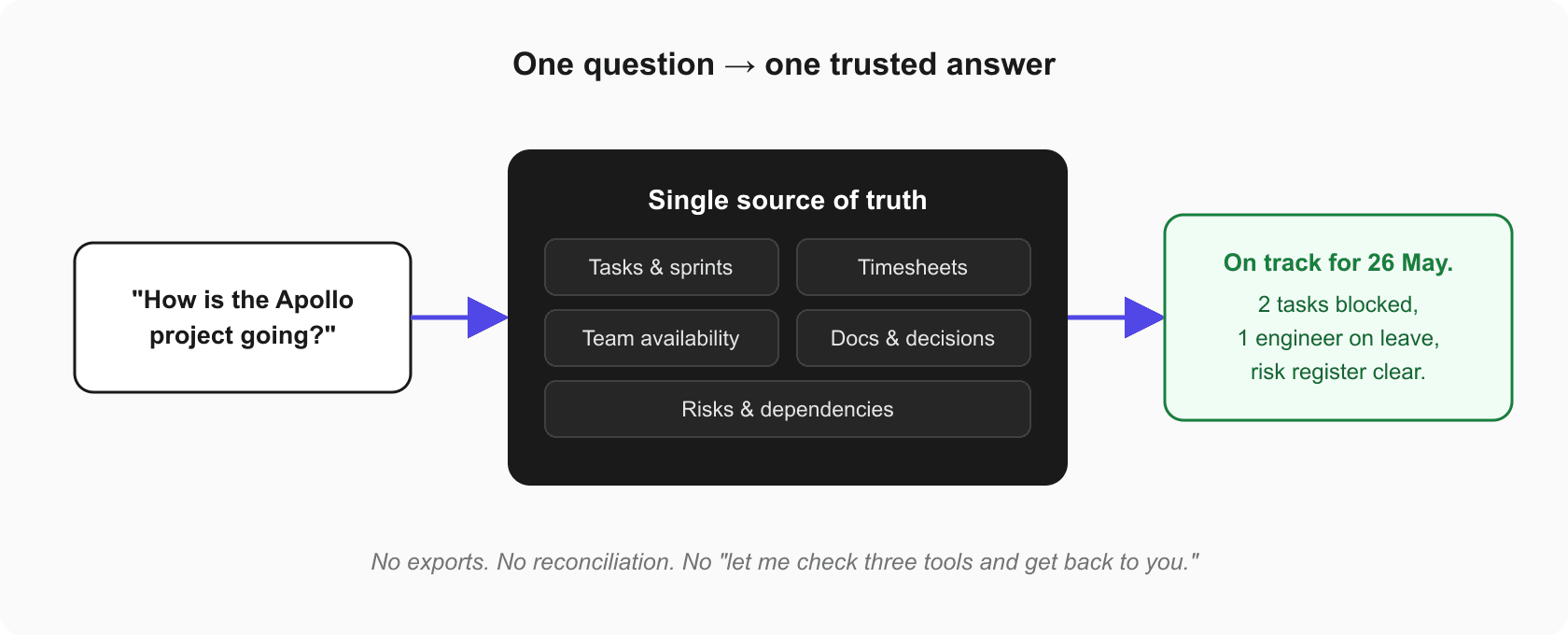
When projects, communication, knowledge, HR and security operations share one platform, useful things start happening by default. A project's status is whatever the project record says - no reconciliation needed. New starters find the current process doc, not one of four stale ones. Leadership dashboards draw from live data rather than last week's exports.
And there's a newer, arguably bigger payoff: AI. AI systems are only as good as the context they can see. An assistant reading one tool sees one fragment; an AI working on top of a unified platform sees the whole business - who's on leave, which tasks are blocked, what the SOP says, which risks are open. A single source of truth isn't just an operational upgrade any more. It's the prerequisite for AI that gives answers you can act on. (We cover this in depth in Why AI Needs Complete Business Context.)
How to get there
You don't need a two-year data programme. Start by listing where your critical facts live today - project status, headcount, leave, credentials, SOPs - and count the duplicates. Then consolidate the categories with the worst drift first. Most teams find that projects, knowledge and HR data deliver the fastest wins, because they're the facts people ask about daily.
This is the problem Hplix was built for: projects (Planix), communication (Chat), knowledge (Wiki), HR, security and operations in one platform - a single source of truth your team, and your AI, can actually rely on.